
Commercial and industrial boilers are the unsung heroes of countless facilities. Working under the radar, boilers perform big jobs from heating office buildings and schools to ensuring sterilization systems in care facilities. Boilers deliver the heat and/or hot water to keep your operations running. It’s necessary to be aware of the safety features of these essential pieces of equipment.
Boiler Safety is a Critical Consideration
Modern boiler systems are incredibly safe, but as with any equipment, there are still risks, especially if safety is overlooked. Minor boiler malfunctions can turn into catastrophic failures. While boiler-related disasters are very rare, they still happen.
In one recent instance, a boiler explosion in Missouri resulted in fatalities, destroyed part of a facility, and led to millions of dollars in damages. It’s a sobering reminder that even the most reliable workhorses demand respect.
But there’s no reason to fear your boiler, especially if you’re using a modern boiler system and following simple safety precautions. Today’s boilers have multiple layers of built-in protection. When properly installed, maintained, and monitored, the risks are minimal, and the benefits can be significant for the continuity of your business.
There are several crucial safety features that every commercial boiler should have. A boiler shouldn’t be considered “safe” just because it works. Integrated protections help to detect and prevent unsafe conditions quickly.
For most new boilers, safety features aren’t optional extras. These requirements are mandated by the American Society of Mechanical Engineers (ASME), OSHA, and local and state building and plumbing codes. Some states even require registering your boiler with DHS and getting semi-regular inspections done via your insurance company, so make sure you know the rules in your state. These standards provide a stopgap and check that ensures your equipment will avoid overpressure, overheating, fuel accumulation, and other dangerous conditions.
In short, a safe boiler is one that is compliant and professionally installed. Many are equipped to shut down and/or alert staff well before something catastrophic goes wrong.
Some Essential Boiler Safety Features
Modern commercial and industrial boiler systems have boiler safety features built in as a layered defense against mechanical failure, human error, and environmental changes. These features make them a safe and smart solution if they fit the hot water needs (or radiant heat requirements) of your space. While this list may not cover every safety mechanism on every boiler on the market, these are the most critical safety elements that any commercial boiler will likely have:
1. Pressure Relief Valve
Just like you, your boiler needs some pressure relief now and then. Since it can’t go to the bar or the gym to literally “blow off steam,” the pressure relief valve acts as the boiler’s failsafe. When pressure climbs too high, the valve releases the steam and hot water, preventing catastrophic rupture.
Pressure buildup is the leading cause of boiler explosions. Today’s boilers have standard relief valve solutions, so you shouldn’t worry. Relief valves are designed to open automatically at a specific safety setpoint. However, if you ever notice leaks, corrosion, or unusual pressure changes, call a pro right away.
2. Low Water Cutoff
The purpose of a boiler is to heat water, which requires maintaining a minimum water level at all times to function correctly. You should never run a boiler without sufficient water. Modern boilers have a low-water cutoff sensor that automatically shuts down the burner if the water level falls too low.
Without enough water, boilers “dry fire,” which can severely damage the tubes and potentially trigger combustion. Cutoffs are designed to shut down automatically, but if you notice unusual water levels or alarms, it’s a signal to have the system checked. Sediment buildup can block sensors, posing a hazard as well.
3. Flame Safeguard Control
The flame safeguard control monitors the burner flame. Should ignition fail, the safeguard will ensure that the fuel shuts off right away. Excess unburned fuel can collect inside the combustion chamber. If it ignites after accumulation, it can erupt in a violent fire.
In today’s world of commercial and industrial boilers, safeguards work and boilers are safe. It is, however, important that you have the flame sensors regularly tested and replace them according to the manufacturer’s recommendation. Consult with your water heater professional if you have questions or concerns.
4. High/Low Gas Pressure Switches
Gas-fired boilers should operate within safe pressure parameters. To ensure this happens, pressure switches are installed and automatically shut down burners should gas pressure get too high or low. This should guarantee complete combustion, helping you avoid unsafe flames or flameouts.
Once again, you don’t need to be a plumbing or pipefitting expert. Simply make sure that the calibration on your boiler is handled by a qualified pro. Water heating professionals will understand the lay of the land.
5. Water Level Indicators (Sight Glass + Probes)
Water level indicators provide boiler operators with a view of water levels. Most boilers use a sight glass for manual/visual verification along with electronic probes for automation.
These indicators are a safety redundancy–if one sensor fails, there’s always a backup. Maintenance staff should regularly check the sight glass for fogging or dirty glass, and if they find any, it’s time to have it inspected. You need a clear view to keep things safe.
6. Temperature Controls and Limits
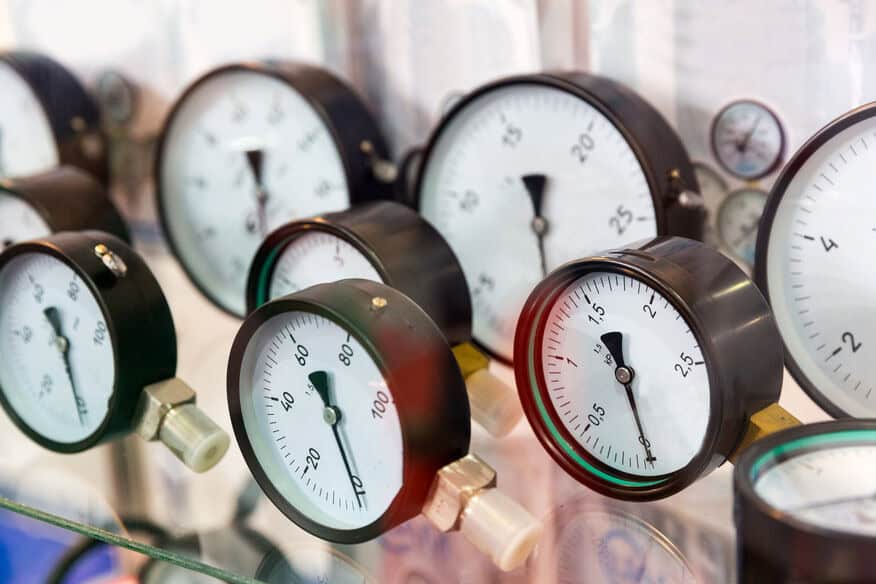
Hot water needs to be, well, hot. Boilers must maintain a proper water and steam temperature to ensure consistent performance. High-limit controls are installed in boiler systems to prevent overheating and thermal shock.
Overheated boilers can rupture or damage pipes and tanks. Remember that hot water expands, which presents a significant concern in a boiler system. Because it’s a closed-loop system, the expanded water has nowhere to go. Sensors are built into the system to keep temperatures in a safe range. If your system ever overheats or runs erratically, it’s time to call a professional.
7. Lockout Systems / Emergency Shutdown
There are times when the safest move is to shut it down. Modern boilers have lockout circuits that stop operation in the case of a fault or alarm. These may integrate with facility fire and safety systems to prevent escalation of unsafe conditions.
Make sure your staff is trained on how to manually trigger lockouts in emergencies. What would these emergencies look like? Anything that can threaten fuel supply, combustion safety, electrical integrity, or structural stability. In other words, potential hazards include earthquakes, floods, gas leaks (smell of gas or visible fuel), line ruptures, electric sparking or arcing near controls, ventilation blockages, and fire. While we all hope no one faces these issues, it’s always best to keep staff aware of best practices and safety protocol.
Modern boilers have a control panel that acts as the nerve and communication center for the system. The system will have safety sensors, alarms, and operational data. Newer models can trend performance and even connect to building management systems.
Boilers may be one of the oldest water heating methods still in use today, but modern commercial boilers are no antiques! Modern boilers are high-efficiency, safety-driven machines that deliver consistent heat or hot water with advanced controls and materials. They carry forward the reliability of classic hydronic systems while meeting the demands of modern facilities.
When Boiler Safety is Skipped
If you want to imagine worst-case scenarios, you can explore what can happen to boilers without properly working safety systems. While these risks are very rare and occur only when maintenance is ignored for a lengthy time, the consequences are still severe.
Boiler explosions and ruptures present the biggest safety threat. Overpressure and overheating can destroy your boiler equipment and damage the surrounding property. Fire and scalding can also occur if valves or piping fail, releasing hot water, steam, and even flames.
Toxic gas leaks are also a significant concern when proper ventilation isn’t in place or detectors aren’t working. Carbon monoxide leaks can be deadly in occupied spaces.
Finally, although less dire, situations to avoid include OSHA and code violations. Noncompliance with safety codes can result in fines and reputational damage. Protect your business reputation and integrity by incorporating regular maintenance and diligence into your routine.
Different industries can also face unique boiler safety challenges. For example, care facilities and hospitals must have systems that never fail. Heating and sterilization are musts when it comes to patient and resident safety.
Food production and manufacturing facilities also require tightly controlled process steam. Pressure and temperature accuracy can have a big impact on product quality, cleanliness, and worker safety.
Landlords should also adhere to boiler safety practices. In multi-family houses and commercial buildings, a building owner may be liable for tenant injuries and even property damage. Reliable safety systems help protect occupants and owners alike.
Boiler Safety First
Even the most advanced safety features are useless if neglected. Having a commercial boiler system isn’t high-maintenance, but it’s important to at least familiarize yourself with safety precautions and features to protect your building and your people.
Don’t lose sleep over your modern boiler system. Safety features of today, such as pressure relief valves, low-water cutoffs, and flame safeguards, offer ample defense against the most hazardous failure scenarios.
Still, it’s vital to follow the rule that if anything looks, smells, or sounds “off” in your system, get it checked out. Boiler safety isn’t a guessing game, and you shouldn’t wait for an accident, code violation, or audit failure to reveal weak spots in your HVAC SOPs.
When you have a question about your boiler or are unsure that the safety is up to par, reach out to Reliable Water Services. We’re here 24/7 with a fast response to help you protect your building, your people, and your bottom line.