
Hair color is an essential offering for a salon, but hard water can interfere with that lush, deep color, leaving clients disappointed. Your salon invests in quality color lines, skilled stylists, and the best products for hair. But hard water can undermine all of it.
When color fades too fast, looks brassy, or chemical services don’t process as expected, hard water is often the overlooked culprit. Understanding how mineral buildup impacts color and chemical services puts you in a smart place for protecting your salon’s reputation and your client’s results.
Key Takeaways
- Hard water impacts about 85% of the U.S. It can lead to calcium and magnesium buildup on the hair shaft that blocks color from penetrating evenly.
- High-revenue color services like gray coverage and blonde work are particularly vulnerable to hard water.
- Hard water can undo both product effectiveness and stylist experience with unpredictable results.
- Hard water costs your salon in product waste, redo appointments, equipment damage, and lost clients.
- A commercial water softener is an excellent salon solution, removing variables and improving results (and client satisfaction).
What Is Hard Water and Why Should Salons Care?
The effects of hard water can often go undetected at a salon for a while. That white, chalky residue (hard water minerals) builds up on sinks and faucets. Filmy buildup on water fixtures can reduce water pressure. Equipment like mirrors and glass gets spotting from hard water.
But the more important issue is what it’s doing to the services you offer. If it’s adding wear and tear to your equipment, it’s also adding wear and tear to your clients’ hair. Products are less effective, services like color treatments become unpredictable, and your reputation suffers.
So what is hard water anyway? Hard water refers to water that contains minerals—the water that comes out of your tap, in most cases, is hard. About 85% of the U.S. has hard water, so it’s much more the norm than the exception. And the hardest water tends to be right here in the Midwest, in the South, and the Southwest.
Hard water picks up the higher mineral content as groundwater moves through limestone and chalk deposits. New England and the Pacific Northwest have softer municipal water naturally, but for most of America, hard water is ubiquitous. It contains elevated levels of calcium and magnesium. While these minerals are essential and largely harmless, they build up on surfaces like fixtures. They also build up on hair.
We measure water hardness in what’s called grains per gallon (GPG) or parts per million (PPM). Anything over 7 GPG is considered hard. Whether salon owners realize it or not, they likely have hard water.
For salons and spas, the stakes are considerably higher than they are for a typical household. Water quality directly impacts the service outcomes. Minerals build up on the hair, and coloring is affected; consequently, client satisfaction goes down.
For long-lasting, beautifully reliable hair color and chemical treatments, you need soft, gentle water. A commercial water softener helps you remove any variables and get consistent, gorgeous results.
How Hard Water Affects Hair Color & Chemical Treatments
Does hard water really impact the hair coloring process? It can, more than you may even realize. On the hair shaft, the minerals from hard water build up and create a barrier. This barrier prevents color from penetrating the hair evenly or deeply.
As a result, you get all the things clients don’t want—faster fading, brass tones, and inconsistent results. Even when the coloring is professionally applied and the product is high-end, you can still get disappointing results.
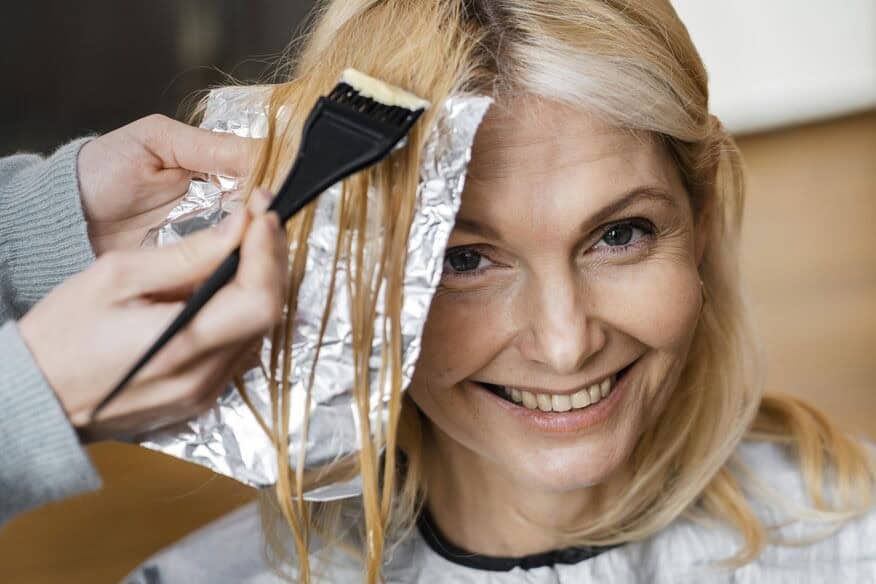
Gray hair is particularly vulnerable. Minerals in the hard water interfere with the lift and deposit process of coloring. Clients can be left with hot roots or uneven gray coverage. Hard water also impacts developer activation. Processing times and results can become even harder to predict.
The threat is compounded because gray coverage is one of the most lucrative services that most salons offer. But hard water can cost you quickly. Minerals create an uneven surface on the hair shaft, and as a result, color deposits less consistently.
Clients may leave their appointments with hot roots, patchy coverage, or gray that breaks through faster than expected.
Blonde services are also affected by hard water. Toning and highlighting work depend on a clean, receptive hair shaft. When mineral buildup comes from hard water, the toners can grab unevenly, pull warm, or fade within a few days.
For clients investing in regular color maintenance, the hard water can make it nearly impossible to get those cool, bright results they’re paying for—even with skilled stylists and high-quality products.
While you could begin with a good clarifying shampoo, it’s really just a band-aid, not a solution. It’s another thing adding time and cost to services…and it doesn’t fully neutralize the minerals in the water anyway. Chelating treatments can be a little more helpful, but they really only address the mineral buildup that’s already on the hair.
As soon as you rinse out the treatment (or the clarifying shampoo), the rinse water you use from the tap adds hard water back into the mix, essentially undoing the treatment. Minerals continue to deposit with each wash.
Perms and relaxers are also sensitive to hard water. Their effectiveness relies on consistent chemical penetration. With mineral buildup from hard water, the process is disrupted, and the results can turn out uneven. Keratin treatments also may not bond as effectively to hair with mineral deposits.
For clients who layer on their treatments, color-treated hair receiving chemical treatments is especially susceptible to hard water damage. Clients can experience dryness, brittleness, and breakage that they may blame on the service rather than the hard water.

The Hidden Business Costs of Hard Water
When stylists compensate for hard water’s inconsistent results with additional color or developer, products get wasted and are less effective. Even worse, if a treatment must be redone, it can eat into your profit margins and stylists’ time. It can be especially frustrating for staff who are following all the instructions and processes to the letter and still get a subpar outcome.
But the higher cost is that client retention suffers when results are unpredictable. It’s never positive when clients leave the salon upset. Clients who have bad experiences at a salon typically won’t return. They will take their business elsewhere. They may also leave negative reviews, damaging your reputation and putting off other potential clients, too.
In such a competitive industry, the stakes are especially high for independent salons and small studio owners, who depend on word-of-mouth. A disappointed color client doesn’t just take her business elsewhere; she tells people.
At a community or neighborhood salon, one negative client review about brassy, faded color can become a real problem. It can spread on social media. A negative review is something that chain salons avoid, but if it happens, they can absorb the hit. A solo stylist or small enterprise can’t. Protecting your color results means protecting your reputation. And in a referral-driven business, reputation is everything.
The hard water damage doesn’t stop there. Hard water damage to salon equipment can be another expensive concern. Showerheads and faucets can become blocked or less functional. This adds to your maintenance and replacement costs over time. Your equipment looks dull, spotty, and aged. Even worse, it becomes much less effective.
What Salons Can Do About Hard Water
While some clarifying treatments and chelating shampoos can help remove mineral buildup temporarily, they don’t address the source. To stop the hard water, your most effective, long-term solution is a commercial water softener installed at the water supply.
Softened water helps hair color penetrate more evenly and process more predictably. Toners hold longer, and clients notice that results look and last better with soft water. Chemical processing also becomes much more predictable, and the results last significantly longer when you use softened water. Softened water is one of those behind-the-scenes changes that makes a noticeable improvement all around.
If you decide to switch to softened water, there’s more good news! Soft water installation doesn’t usually cause disruptions to your operations. A commercial water softener is installed at the water source, so every station benefits automatically, without the need to change your setup or workflow. Most stylists see a big difference fast—often within just a few weeks.
The color results are consistent, with less product waste and happier customers. You’ll save on maintenance and upkeep that hard water can stand in the way of. Salon equipment (sinks, faucets, and more) will run better and get less mineral buildup, too.
Household softeners aren’t built for the volume or the demand of a commercial salon environment. You need a water softener that was built for high use. A commercial-grade system helps ensure consistent water quality across every station, every service, every day.
The ROI shows up in product savings, fewer re-dos, and stronger client retention.
At Reliable Water Services, we provide and maintain commercial water softeners sized and serviced for salon environments. Whether you’re running a large day spa with multiple services or a popular local shop, you can trust that your softened water will give you consistent, noticeably improved results fast. Reach out today to learn more.